BOLD EASY EASTER COLORING BOOK - KDP
First Impressions: Bold, Friendly, and Ready for Stitching
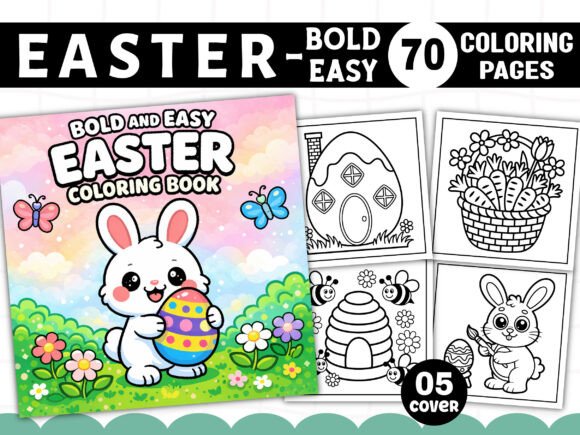
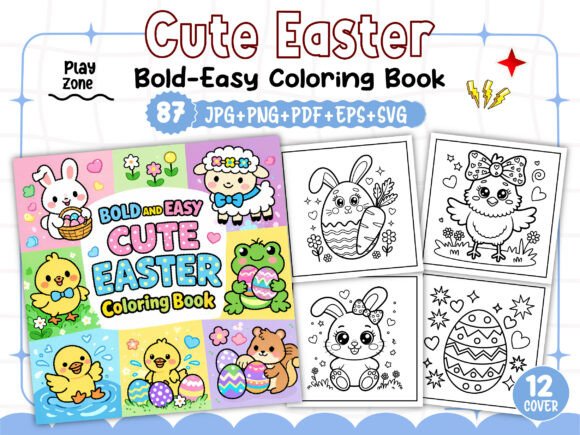
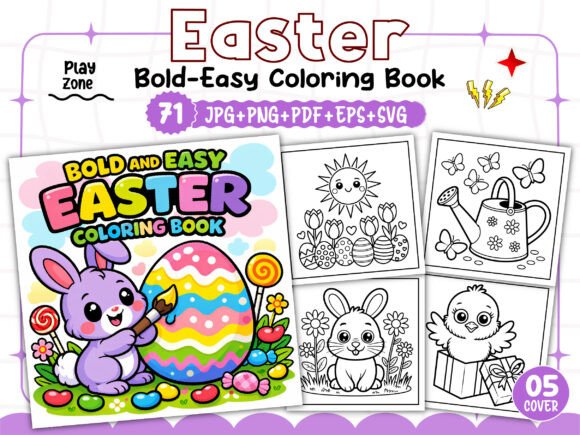
When I opened BOLD EASY EASTER COLORING BOOK - KDP, I wasn’t looking for “cute” — I was looking for workable. As a designer who’s stitched Easter motifs on everything from organic cotton tea towels to baby onesies, I need clarity, breathing room, and confident lines. This set delivers that immediately. The illustrations are high-contrast, with generous negative space and clean outlines — no fragile filigree or micro-details that vanish under satin stitch. Think bunnies with rounded ears, eggs with bold zigzag borders, and spring florals drawn with purpose, not pretense. It feels like a coloring page designed by someone who’s actually held an embroidery hoop — not just a graphic artist pushing pixels.
A Real Project Test: Custom Embroidered Tote Bags for a Local Boutique
Last week, I prepped a batch of canvas tote bags for a neighborhood gift shop’s Easter pop-up. Their customers love handmade charm but hate “busy” designs that look muddy after stitching. I used three motifs from BOLD EASY EASTER COLORING BOOK - KDP — a carrot, a nest with speckled eggs, and a simple “Hop Happy” script — resized and digitized for 4” hoops. The result? Crisp, legible embroidery even at 80% scale. No thread nesting in corners. No fill-stitch bleeding into adjacent shapes. Because the original lines are thick and intentional, the digitized version retained its personality without needing heavy underlay or excessive pull compensation. Customers responded instantly — one picked up a bag and said, “That looks hand-drawn, not computer-made.” That’s the gold standard for handmade product appeal.
Where It Shines (and Where to Pause)
BOLD EASY EASTER COLORING BOOK - KDP excels in projects where readability, warmth, and approachability matter most:
- Custom apparel: Works beautifully on sweatshirt embroidery and relaxed-fit tees — the bold lines hold up against knit texture and gentle stretching.
- Embroidered patch: Clean edges translate cleanly to twill or felt backing; minimal trimming needed.
- Baby embroidery: Soft curves and open shapes read well on onesies and burp cloths — no tiny eyes or delicate stems that get lost in stitches.
- Holiday gifts & nursery decor: The cheerful, uncluttered vibe reads as joyful, not kitschy — ideal for personalized gifts that feel intentional, not mass-produced.
- Craft business assets: These are strong design assets for Etsy sellers building themed collections — think Easter-themed aprons, pillow covers, or kitchen towels.
But — and this matters — it’s not universally flexible. On dark fabric, test contrast carefully: some lighter interior lines may fade unless you adjust thread color or add a white underlay. On curved surfaces like caps, avoid motifs with tight central clusters — the “Easter basket” illustration, for example, has denser fill areas near the handle that can pucker if hooped too tightly. And while the “easy” in the title is earned, don’t assume it’s auto-pilot: small hoop sizes (under 3”) will require simplifying or cropping — those egg patterns look friendly at full size, but shrink them too far and the pattern blurs.
Design Integrity Meets Commercial Reality
What makes BOLD EASY EASTER COLORING BOOK - KDP stand out isn’t just its visual style — it’s how that style supports trust and value. When a customer sees crisp, confident embroidery on a handmade product, they subconsciously register care, skill, and intention. That directly lifts perceived value — especially for small shop products priced above craft-fair basics. I’ve seen buyers hesitate over fussy, over-digitized Easter designs that look frantic or dated. This set avoids that entirely. Its consistency across motifs means you can build a cohesive collection — say, matching embroidered tea towels and baby bibs — without mismatched line weights or competing energy. For Etsy sellers, that cohesion strengthens brand consistency and improves buyer engagement in listings and printable mockups.
Practical Designer Notes Before You Stitch
Before committing to your first finished product, here’s what I always do with a new coloring-page-based embroidery file:
- Test on scrap fabric — same weight and weave as your final project. Watch how stabilizer interacts with the stitch density.
- Check thread color contrast on both light and dark backgrounds — especially for interior details that rely on outline definition.
- Review stitch density visually in your embroidery software. If fills look overly dense or thin in preview mode, adjust before stitching.
- Confirm hoop size compatibility — don’t force a 5” motif into a 4” hoop without evaluating which elements can be safely cropped.
- Inspect small details like whiskers, dots, or script tails — they may need slight thickening or shortening for reliable stitch-out.
- Try a black-and-white mockup — it reveals clarity issues faster than color.
- Use appropriate stabilizer: medium-weight cutaway for knits, tear-away for stable wovens like cotton duck or linen blends.
- Verify licensing — since this is marketed as a KDP interior asset with PNG cover images, confirm whether the files permit commercial embroidery use and resale of finished items. When in doubt, contact the creator directly.
Final Thought: A Thoughtful Starting Point
BOLD EASY EASTER COLORING BOOK - KDP isn’t flashy — and that’s its strength. It’s a grounded, practical, and quietly versatile resource for embroidery designers and creative entrepreneurs who prioritize clarity, charm, and real-world performance over trend-chasing. Whether you’re digitizing for a client’s custom apparel line, prepping holiday inventory for your small shop, or designing a limited-run embroidered patch series, this set gives you clean, confident lines that translate faithfully to thread. It respects your time, your machine, and your customer’s eye — and in the world of handmade product development, that’s rare, valuable, and deeply professional.