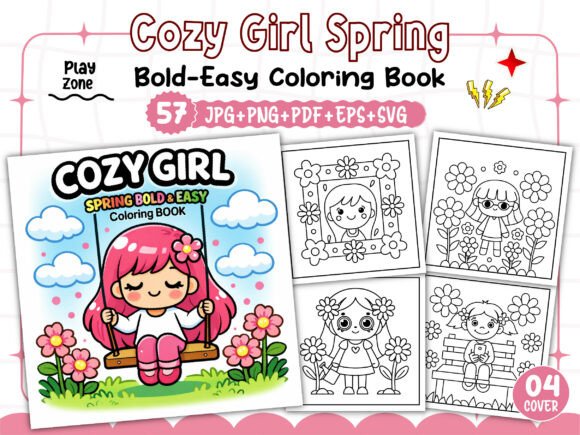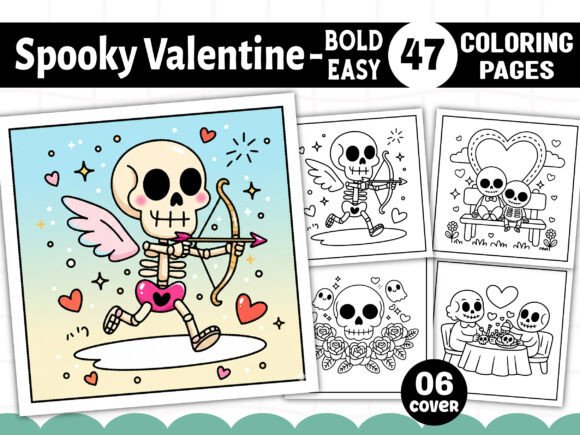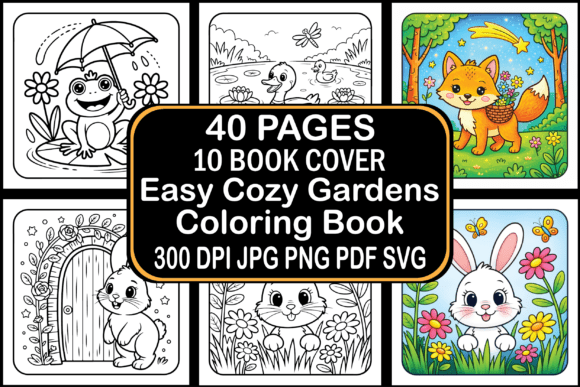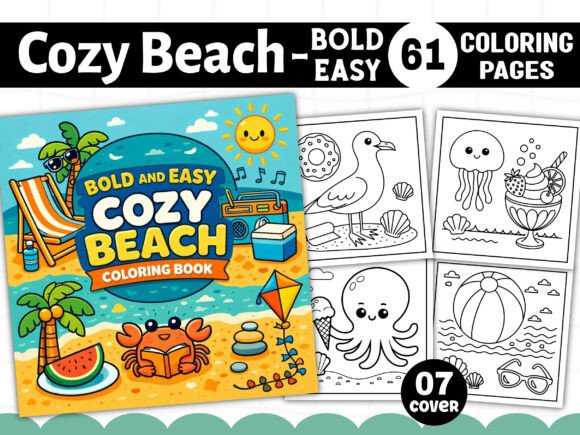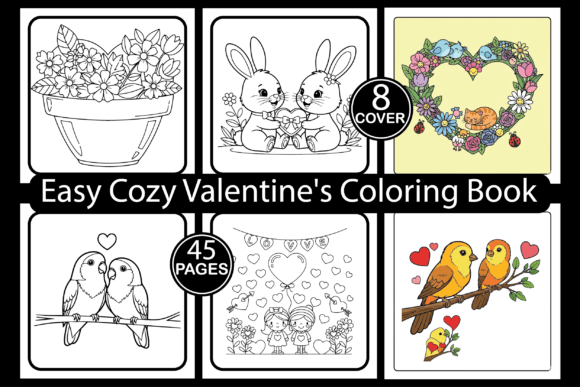
Easy Cozy Valentine’s Coloring Book
A Designer’s First Glance: Warm, Simple, and Stitch-Ready
Opening Easy Cozy Valentine’s Coloring Book, I immediately felt its quiet charm — soft outlines, gentle curves, and intentional simplicity. These aren’t fussy illustrations; they’re friendly, low-detail coloring pages built around hearts, mugs, cozy socks, sleepy cats, and handwritten-style phrases like “You’re My Person” and “Love You More.” As an embroidery designer who’s stitched hundreds of holiday-themed pieces, I appreciate how clearly this collection leans into warmth over complexity. That matters — because what reads beautifully on paper must also translate cleanly to thread.
Real Project Test: Embroidering a Linen Tea Towel for a Local Boutique
Last week, I used one of the heart-and-mug designs from Easy Cozy Valentine’s Coloring Book as the centerpiece for a limited-run linen tea towel series. Why this design? Its open shapes and generous negative space made it ideal for fill stitch without overcrowding. No tiny interior details demanded satin-stitch precision — just clean, confident lines that held up beautifully at 3.5" wide on medium-weight linen. Customers loved the handmade feel: not too precious, not too generic. It looked like something a thoughtful friend made — not a mass-produced clipart drop-in.
Where This Coloring Book Shines in Embroidery Work
- Custom apparel: Works especially well on sweatshirts and relaxed-fit tees — the soft theme complements casual wear without competing with texture or drape.
- Tote bags & pillow covers: Bold enough to read at arm’s length, simple enough to avoid thread buildup or puckering on woven cotton canvas or linen blends.
- Baby items & nursery decor: Gentle motifs (think sleeping bunnies, tiny mittens, or heart-shaped onesies) align naturally with baby embroidery — no sharp edges, no overwhelming detail.
- Patches & aprons: Several designs have self-contained borders and clear silhouette structure — perfect for iron-on or sew-on patches meant for cafés, craft studios, or gift shops.
- Holiday gifts & small shop merchandise: The cohesive “cozy” mood builds brand consistency across product lines — imagine matching mugs, towels, and greeting cards all pulling from the same visual language.
Where to Proceed With Care
This isn’t a one-size-fits-all embroidery file — and that’s okay. Easy Cozy Valentine’s Coloring Book performs best when matched thoughtfully to context:
- Small hoop sizes (under 4"): Some motifs include light decorative flourishes — test first. A delicate swirl around a heart may vanish if scaled too small or stitched too densely.
- Textured or stretchy fabrics: Avoid heavy fill areas on terry cloth or jersey unless you use cutaway stabilizer and reduce stitch density manually.
- Dark fabric backgrounds: Since these are line-art coloring pages, contrast depends entirely on your thread choice. Always mock up in black and white first — some thin outlines won’t pop on navy or charcoal without careful thread selection.
- Curved surfaces (caps, hats): Stick to flatter, more compact motifs — avoid wide horizontal layouts that distort across seams or crowns.
- Frequent-wash items (baby clothes, kitchen towels): Reinforce backstitching and avoid overly fine linework that could fray after repeated laundering.
What It Adds — and What It Doesn’t Pretend To Be
Easy Cozy Valentine’s Coloring Book doesn’t try to be intricate lacework or photorealistic portraiture. Instead, it delivers clarity, calm, and commercial flexibility. When stitched, it reads as intentionally handmade — not rushed, not sterile. That builds trust: customers see care in the line weight, spacing, and rhythm of each motif. For Etsy sellers and small shop owners, that authenticity translates directly to perceived value and repeat engagement.
It also supports smart branding. Because the style is consistent across 45 pages, you can build a full Valentine’s product suite — embroidered tea towels, printable gift tags, digital mockups for social posts, even coordinating patch sets — all anchored by the same visual voice. That kind of cohesion saves time and strengthens recognition.
Practical Notes Every Embroidery Designer Should Run Through
- Test the design on scrap fabric *first* — especially if using textured or dark materials.
- Check thread color contrast against both light and dark backgrounds before finalizing your palette.
- Review stitch density — many coloring-page designs translate to high-fill embroidery; adjust if needed for breathability or drape.
- Confirm hoop size compatibility — scale carefully, and avoid stretching narrow elements beyond their structural integrity.
- Inspect small details like lettering or inner contours — they may need manual cleanup or simplification for reliable stitching.
- Use proper stabilizer for your fabric type — tear-away works well for stable wovens; cutaway is safer for knits or lightweight linens.
- Verify licensing terms — since this is marketed for KDP, POD, and commercial resale, confirm whether finished embroidered products or derivative digital assets require attribution or carry usage limits.
Final Thought: A Quietly Versatile Asset
Easy Cozy Valentine’s Coloring Book won’t shout across a craft fair table — but it will draw people in. It’s the kind of design that makes a customer pause, smile, and say, “That feels like *me*.” For embroidery designers building meaningful handmade products — not just stitched logos — that resonance is everything. Used with intention, it becomes more than a coloring page. It becomes a quiet invitation to warmth, care, and connection — one stitch at a time.