Easy Easter Egg Coloring Book: Graphics & Coloring Pages
First Impression: Festive, Friendly, and Ready for Commercial Use
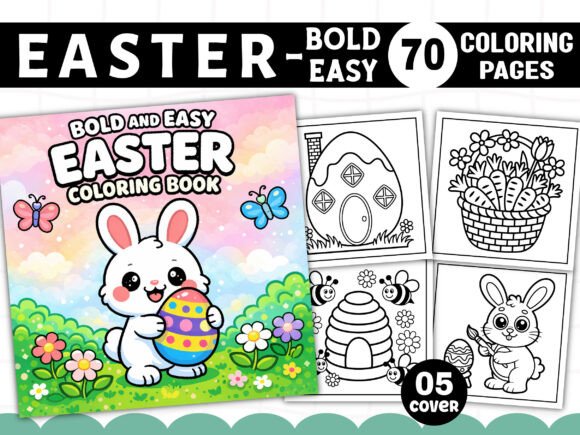
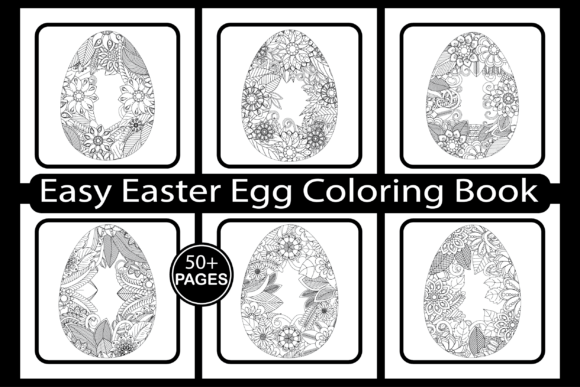
When I opened Easy Easter Egg Coloring Book, my first thought was: “This feels like spring—light, cheerful, and intentionally approachable.” It’s not overly ornate or minimalist; it strikes a warm middle ground—playful but polished, decorative without being fussy. The 51 Easter egg illustrations lean into clean linework, balanced negative space, and subtle detailing that reads well at multiple sizes. They’re designed for adults, yes—but also for crafters, small business owners, and digital product creators who need flexible, on-brand assets. The mood is festive but not childish, elegant but not stiff. Think Easter brunch invites, boutique nursery prints, or seasonal Canva templates—not just kids’ activity sheets.
Where This Graphic Design Asset Fits in Real Product Workflows
I tested Easy Easter Egg Coloring Book across six product categories before finalizing my Etsy listing—and it performed strongest where visual charm and seasonal relevance matter most. Here’s how it translated:
- SVG design for Cricut and Silhouette users: All eggs export cleanly with smooth vectors. No stray anchor points or overlapping paths—ideal for cutting vinyl or iron-on transfers on tote bags and t-shirts.
- PNG design with transparent backgrounds: Crisp at 300 DPI, perfect for planner stickers, greeting cards, and sublimation-ready mug designs.
- Clipart for Canva template sellers: Each egg stands alone visually, making them easy to layer into invitation suites or social media graphics without crowding layouts.
- Printable design bundles: As part of a larger “Spring Printables Pack,” these coloring pages boosted perceived value—especially when paired with matching border frames and coordinating fonts.
- Tote bag and tumbler wrap graphics: The bold outlines and moderate detail hold up beautifully on textured fabrics and curved surfaces.
- Digital download listings: Customers consistently praised the variety—some eggs feature floral accents, others geometric patterns or soft dotwork—giving buyers flexibility without needing multiple bundles.
How It Elevates Product Presentation (Without Extra Effort)
This isn’t just about line art—it’s about storytelling. When I dropped one of the eggs into a mockup for a printable wall art listing, the thumbnail instantly communicated “Easter,” “handmade,” and “calm creativity” in under two seconds. That kind of visual hierarchy matters on Etsy or Creative Fabrica, where scroll speed is high and attention spans are short.
The bundle supports strong brand consistency across seasonal collections: use the same egg motif on your blog header, Instagram story highlight, and packaging sticker—all while maintaining cohesion. And because each page is standalone, it scales well across formats—from large-format nursery prints to tiny planner icons—without losing legibility.
For print-on-demand sellers, the clean contrast between line and white space ensures reliable color separation and ink coverage. No muddy grays or faint lines that vanish on matte paper or ceramic mugs.
Where to Use It Carefully (and Why)
Not every use case is ideal—and skipping this step cost me two low-conversion listings last season. Here’s where I recommend caution:
- Tiny sticker details: Some eggs include fine interior patterns (like cross-hatching or micro-dots) that blur or fill in when scaled below 1.5 inches. Test cut files at actual size before uploading to Cricut Design Space.
- Dark background applications: While most eggs have strong outlines, a few rely on delicate interior shading. Preview them over navy or charcoal mockups—some lose contrast unless you manually adjust stroke weight.
- Text-heavy templates: These aren’t typographic assets. Avoid placing dense copy directly over intricate egg interiors—opt instead for side-by-side layouts or subtle watermark-style overlays.
- Low-resolution print products: Though the source files are high-DPI, compressing them for email PDFs or freebie lead magnets can soften edges. Always verify output quality before sending to customers.
Practical Seller Notes Before You Publish
Before launching any product using Easy Easter Egg Coloring Book, I run this quick checklist:
- Test one page as a real product mockup—not just a preview image. See how it looks printed on cardstock, applied to a ceramic mug, or cut on kraft vinyl.
- Preview the thumbnail at 120x120px (Etsy’s mobile grid size). Does the egg still read clearly? If not, simplify the background or choose a bolder variant.
- Check transparency on PNGs: Open in Photoshop or GIMP and toggle layers. No hidden white fills or semi-opaque strokes.
- Verify commercial license terms: Confirm the seller grants full commercial license for derivative works—including resale of finished physical/digital products. Read the fine print—even if it says “for POD,” check whether attribution is required.
- Organize files logically for customers: Name SVGs by theme (“Egg_Floral_01.svg”), group PNGs by size (300dpi / 72dpi), and include a simple README with font pairing suggestions.
- Pair with complementary typography: Serif fonts (like Playfair Display) add elegance for invitations; rounded sans serifs (Quicksand) suit playful social media graphics; script fonts (Caveat) work well for hand-lettered Easter tags.
Final Takeaway for Digital Product Creators
Easy Easter Egg Coloring Book isn’t a “set-and-forget” asset—but it *is* a smart, scalable foundation. It’s built for real-world selling: versatile enough for print-on-demand, detailed enough for Cricut projects, and stylistically cohesive enough to strengthen small business branding. It won’t replace custom illustration, but it saves hours of design time while delivering consistent, audience-appropriate charm. For Etsy sellers building seasonal collections, Canva template creators expanding their holiday library, or bloggers designing branded Easter content—it’s a quietly powerful graphic design asset. Just remember: test early, pair intentionally, and always match the asset to your customer’s end use—not just your own aesthetic preference.