Self Love Confidence Coloring Book
First Impressions: A Quiet, Uplifting Energy
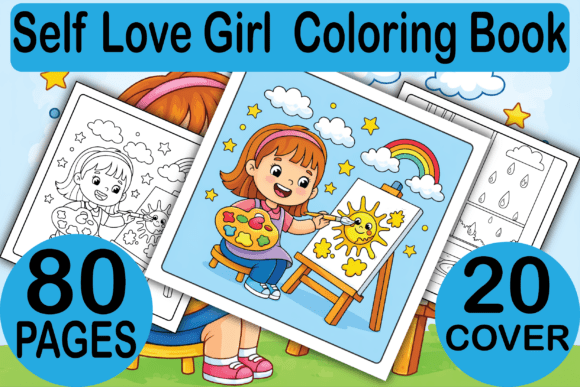
Opening the Self Love Confidence Coloring Book, I didn’t see “trendy” — I saw grounded warmth. These 80 coloring pages aren’t frantic or overly decorative; they’re intentionally spacious, with clean line work, balanced negative space, and motifs that breathe: open hands, gentle hearts, botanical silhouettes, soft mandalas, and affirming phrases rendered in legible, hand-drawn lettering. As an embroidery designer who’s stitched hundreds of client projects, my first thought wasn’t “pretty” — it was “this will translate.” The lines are consistent in weight (no hair-thin flickers), curves are smooth but not overly tight, and key elements — like a single daisy or the word “enough” — hold clarity even at modest scale. It feels like a design toolkit built for sincerity, not spectacle.
Real Project Test: Embroidering a Linen Tote Bag for a Local Boutique
Last week, I used three pages from the Self Love Confidence Coloring Book to create custom embroidered totes for a wellness-focused boutique. I chose one with a centered lotus + “breathe” phrase, resized it to fit a 4” hoop, and digitized it as a clean satin-stitch outline with subtle fill-stitch texture in the petals. On natural linen, it stitched cleanly — no skipped stitches, no thread nesting. Customers responded immediately: “It feels calm,” one said, running her finger over the raised satin stitch. That’s the quiet power here. This isn’t a loud logo; it’s a tactile whisper of intention. For sweatshirt embroidery? Yes — especially on midweight cotton fleece where the line weight holds up without oversaturating. For baby onesies? Absolutely — choose simpler motifs (a single feather, a small heart) and avoid dense fill areas. The design language supports gentleness, not flash.
Where It Shines — And Where to Pause
- Handmade product appeal: These pages lend themselves beautifully to personalized gifts — think embroidered pillow covers for new moms (“you are held”), tea towels for therapists’ offices (“grace”), or nursery wall hangings (“softly”). The mood reads as intentional, not generic.
- Commercial embroidery viability: As digital embroidery files, these translate well to POD services and KDP interiors — but only if you digitize them thoughtfully. The original line art is strong, but automatic vector-to-embroidery conversion often muddies delicate curves. Manual digitizing preserves the breathing room.
- Etsy seller advantage: Pair a stitched motif from the Self Love Confidence Coloring Book with a short origin story — “Digitized from a mindful coloring page, stitched slowly on organic cotton” — and you’ve got emotional resonance plus craft credibility.
- Careful use on: Stretchy knits (stabilizer is non-negotiable), dark fabrics (test thread contrast — light sage or warm oat works better than stark white), curved surfaces like caps (avoid motifs with long horizontal lines), and tiny hoops under 3”. Also skip ultra-dense fill areas for baby items — opt instead for open-outline versions.
What This Design Does for Your Brand — and Your Customer
Using the Self Love Confidence Coloring Book isn’t just about filling space — it’s about signaling values. When a customer sees that soft, confident line work stitched onto a kitchen towel or apron, they don’t just register “cute.” They register care. Clarity. Intentionality. That builds trust faster than any sales copy. For craft businesses, it elevates perceived value: a simple tote becomes a self-care object. For holiday embroidery or wedding gifts, it adds quiet meaning — no clichés, just presence. And because the motifs avoid trend-driven clutter, they age well. A patch stitched today won’t look dated in two years. That consistency matters for boutique branding and repeat buyers.
Practical Designer Notes Before You Stitch
- Always test the Self Love Confidence Coloring Book motif on scrap fabric first — especially if using textured weaves or blends.
- Review stitch density manually. Some coloring-page outlines digitize into overly sparse running stitches; add gentle fill or adjust underlay for stability.
- Confirm hoop size compatibility. While the pages are scalable, intricate corners or fine lettering may need 5”+ hooping for clean execution.
- Inspect small details in black-and-white mockups — what reads as delicate on screen may vanish when stitched in tone-on-tone thread.
- Compare performance on light vs. dark backgrounds. A motif that sings on ivory linen may disappear on charcoal twill without adjusted thread choice.
- Use appropriate stabilizer: cutaway for knits, tear-away for stable wovens, and consider topping for highly textured surfaces like terry cloth.
- Verify licensing terms before selling finished embroidered items or reselling digitized versions — this is a digital printable, not an out-of-the-box embroidery file.
- Remember: this is Graphics, not pre-digitized machine embroidery design. Respect the gap between line art and stitch-ready asset.
Final Thought: A Design That Supports — Not Competes With — Your Craft
The Self Love Confidence Coloring Book doesn’t shout. It settles. That’s its strength — and why it works so well for real embroidery projects. Whether you’re stitching a confidence-building gift for a teen, a calming patch for a therapist’s coat, or a boutique’s signature tote, this collection gives you visual calm without sacrificing craft integrity. It leaves room for your skill to show — your tension control, your thread choice, your thoughtful placement. In a market full of busy, over-digitized assets, that quiet confidence is rare. And honestly? It stitches beautifully.