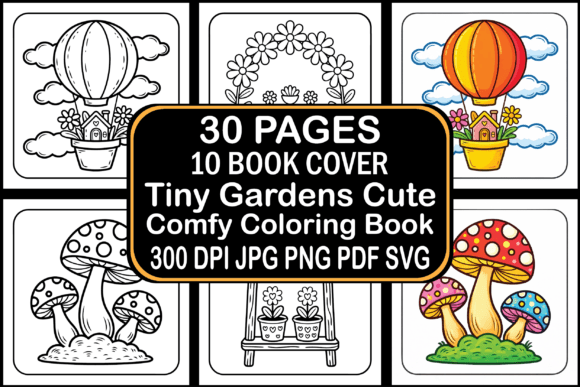
Tiny Gardens Cute Comfy Coloring Book
First Impressions: Whimsy That Stitches Well
Opening Tiny Gardens Cute Comfy Coloring Book, I didn’t just see line art—I saw potential stitched in soft greens, warm terracottas, and quiet blues. These 30 coloring pages aren’t busy or overly intricate; they’re intentionally gentle, with rounded shapes, open negative space, and botanical motifs that breathe—tiny mushrooms, curling vines, sleepy snails, dandelion clocks, and miniature flowerpots. As an embroidery designer who’s stitched everything from wedding monograms to boutique tea towel sets, I immediately sensed how well this collection translates to thread: low stitch density, generous line weight, and consistent spacing between elements mean fewer skipped stitches and cleaner hooping on real-world fabrics.
A Real Project Test: Embroidering a Linen Baby Apron
Last week, I used one of the garden-themed pages—a simple potted fern with a wavy border—as the centerpiece for a custom linen baby apron. Not as a direct trace, but as a cleaned-up, simplified machine embroidery design. The result? A sweet, uncluttered motif that held its shape after washing and ironing. Parents loved the tactile softness of the satin-stitched leaves against the natural linen texture—and crucially, no tiny stems vanished into the weave. That’s where Tiny Gardens Cute Comfy Coloring Book earns its keep: it’s designed *for* translation, not just coloring. The outlines are confident, not faint or pixelated, and the compositions avoid tight corners or micro-details that would vanish under fill stitch or fray on thin cotton.
Where It Shines (and Where to Pause)
Tiny Gardens Cute Comfy Coloring Book works beautifully for:
- Custom apparel: Think relaxed-fit sweatshirts, oversized tees, and lightweight denim jackets—especially on chest or sleeve placements where subtlety reads as intentional charm.
- Tote bag design and pillow covers: The balanced scale and organic flow suit medium-to-large hoop sizes without needing aggressive resizing.
- Baby embroidery and nursery decor: Soft lines, no sharp angles, and nature-based themes align perfectly with gentle, non-gendered gifting.
- Holiday embroidery and wedding gifts: A sprig of tiny lavender or a mini herb garden reads as thoughtful, handmade, and quietly meaningful—not kitschy or overdesigned.
- Etsy seller and small shop product mockups: These pages convert cleanly into printable mockups or digital previews that feel cohesive, calm, and brand-aligned—even before stitching begins.
But—and this matters—Tiny Gardens Cute Comfy Coloring Book isn’t built for every surface. Proceed with care on:
- Curved surfaces like caps or beanies: Some motifs with wide borders or asymmetrical layouts may distort unless repositioned or simplified.
- Stretchy fabric (e.g., knits or ribbed cuffs): Always pair with cutaway stabilizer and test stitch density—these designs rely on clean edges, which can blur if fabric shifts.
- Dark fabric: While the line art is bold enough for tracing, consider whether your final embroidery file will need adjusted underlay or denser satin stitch to prevent shadowing through dense thread coverage.
- Textured fabrics like bouclé or heavy terry cloth: Tiny stems or fine tendrils may get lost—opt for bolder variants from the bundle, or simplify manually before digitizing.
What It Adds to Your Finished Product
This isn’t just about prettiness—it’s about perception. When customers see a tote bag embroidered with a motif pulled from Tiny Gardens Cute Comfy Coloring Book, they register intentionality: calm, care, craftsmanship. That translates directly to perceived value. Handmade product buyers respond to clarity and consistency—and these pages deliver both. No visual noise, no competing focal points. That means your personalized gift feels curated, not generic. Your craft business gains quiet professionalism. Even your Etsy listing benefits: clean line art converts more easily into crisp product photos and layered mockups that build buyer trust before a single stitch is made.
Practical Notes Every Embroidery Designer Should Keep Handy
Before digitizing or stitching:
- Test on scrap fabric first—especially if using textured or dark materials.
- Check thread color contrast early: light greens and creams pop on navy, but fade on olive or charcoal unless you adjust stitch density or add outline layers.
- Review stitch density in your embroidery software—some motifs may benefit from slightly reduced fill density to keep them breathable on lightweight apparel.
- Confirm hoop size compatibility: Most motifs fit comfortably in a 4x4” hoop, but a few border-heavy pages may need 5x7” for optimal spacing.
- Inspect small details at 200% zoom—look for unintentional gaps, overlapping paths, or hairline joins that could cause thread breaks.
- Test in black and white mockups to gauge contrast and legibility across backgrounds.
- Use proper stabilizer: Tear-away for stable wovens, cutaway for knits or delicate linens.
- Verify licensing: Since this is marketed for KDP interior and POD products, confirm whether commercial use extends to physical embroidered goods—or if you need separate permissions for finished product resale.
Final Thought: A Quiet Asset for Intentional Making
Tiny Gardens Cute Comfy Coloring Book won’t shout from a craft fair table—but it will hold attention. It supports slow, considered making: the kind where a customer chooses your embroidered tea towel because it feels restful, not flashy. It’s the kind of design assets that lets your skill shine, rather than fighting against fussy vectors or muddy scans. Whether you’re building a cohesive line of nursery goods, launching a seasonal holiday embroidery collection, or simply choosing your next embroidery project for a client who values warmth over wow, this bundle offers grounded, stitch-ready inspiration—no overhauling required.