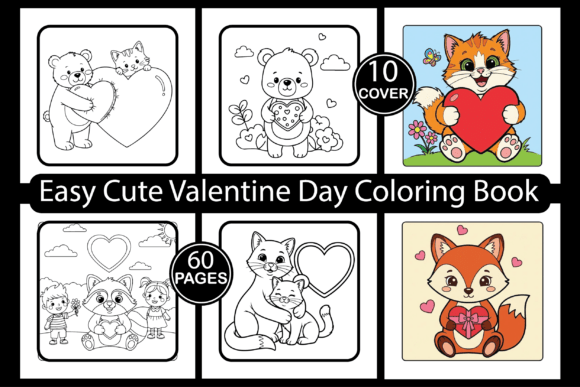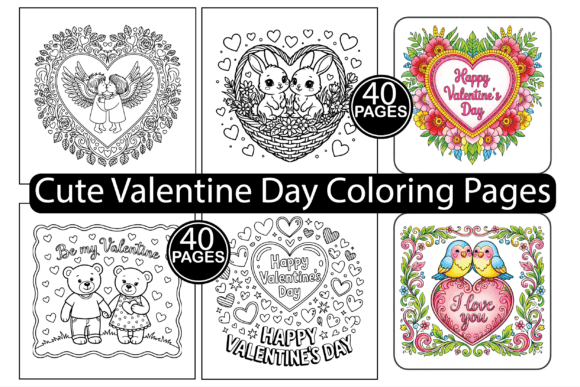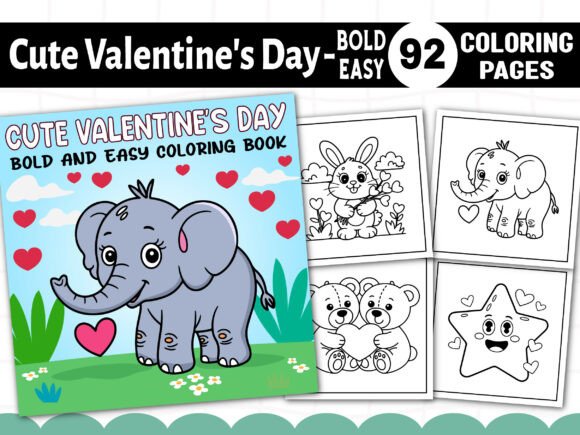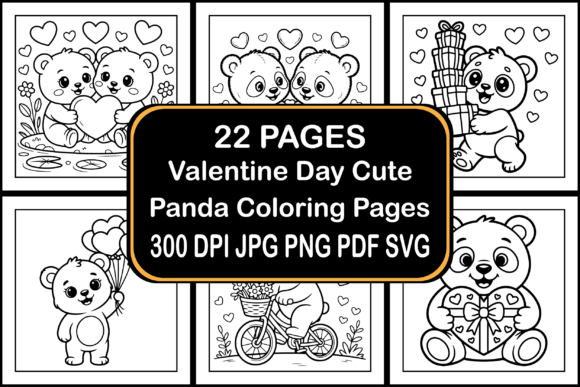
Valentine Day Cute Panda Coloring Pages
A Designer’s First Glance: Sweet, Simple, and Stitch-Ready
Opening the Valentine Day Cute Panda Coloring Pages bundle, I immediately felt its quiet charm—not loud or flashy, but warm, approachable, and intentionally uncluttered. As an embroidery designer who’s stitched everything from intricate floral monograms to dense logo patches, I appreciate when a coloring page translates well into stitchable form. These 22 designs lean into soft outlines, generous negative space, and gentle curves—ideal for hand-drawn authenticity in machine embroidery. The pandas wear hearts, hold candy, snuggle with roses, or peek from behind valentines—all rendered with consistent line weight and intentional breathing room around key features. That spacing isn’t just for coloring; it’s what keeps satin stitches from bleeding on cotton twill or running stitches from collapsing on knit fabric.
Real Project Test: Embroidering a Personalized Tote for a Local Boutique
Last week, I used one of the panda-with-heart designs (Page #7) to embroider a linen-cotton tote for a small gift shop launching their Valentine’s pop-up. I chose a medium-density fill stitch for the panda’s body and a clean running stitch for the outline—no applique needed. On light fabric, the design read clearly at 3.8" wide. Customers responded instantly: “It’s sweet but not cloying,” one said. “Feels handmade, not mass-printed.” That’s the quiet strength of Valentine Day Cute Panda Coloring Pages: it bridges coloring-book whimsy with craft credibility. It doesn’t scream “holiday”—it whispers “thoughtful,” which works beautifully for boutique merchandise, baby shower gifts, or teacher appreciation bundles.
Where It Shines—and Where to Pause
Valentine Day Cute Panda Coloring Pages excels on stable, medium-weight fabrics: canvas totes, denim jackets, cotton tea towels, and structured pillow covers. Its open-line aesthetic handles sweatshirt embroidery well—especially on lighter heather grays—because there’s no dense fill to overwhelm the fabric’s texture. For baby embroidery? Perfect. The rounded shapes avoid sharp corners that could irritate sensitive skin, and the minimal detail holds up beautifully on onesies or burp cloths when digitized with appropriate underlay and reduced density.
But here’s where attention matters: avoid using the most detailed pages (like #14 with tiny heart clusters or #19’s script-style “Be Mine”) on stretchy fabrics, curved surfaces like caps, or ultra-thin gauze. Those fine lines shrink unpredictably in hoop tension or distort on ribbed knits. Also, skip dark fabrics unless you’re willing to add a white underlay—or better yet, test first. Some pages include subtle interior linework that may vanish without contrast. And while the bundle is labeled for KDP and POD interiors, remember: as graphics, they’re outlines—not pre-digitized embroidery files. You’ll need to convert them thoughtfully for machine embroidery design use.
Stitching Clarity = Customer Trust
In my experience, customers don’t buy “cute.” They buy confidence—confidence that your handmade product will look as lovely in person as it does in your Etsy listing. The clean, balanced composition of Valentine Day Cute Panda Coloring Pages supports that. There’s no visual competition between elements, so when you stitch it, the panda reads first, the heart second, and the mood lands instantly. That clarity elevates perceived value—especially for personalized gifts. A custom embroidered pillow cover with Page #3 (panda hugging a giant heart) feels intentional, not slapped-on. It reinforces brand consistency for small shop owners who use cohesive seasonal themes across apparel, patches, and home goods.
Practical Notes Every Embroidery Designer Should Keep Handy
- Always test on scrap fabric first—especially if stitching on textured weaves or blends. Linen, terry cloth, and fleece behave very differently with the same outline density.
- Review thread color contrast carefully. These designs rely on shape and silhouette. A pale pink thread on blush fabric can disappear; try charcoal gray or deep rose instead for warmth without loss of definition.
- Check stitch density before scaling. Enlarging beyond 4.5" may require adjusting fill angles or adding stop points to prevent puckering on lightweight cotton.
- Confirm hoop size compatibility. Most pages fit comfortably in a 4x4 hoop at standard scale—but intricate variants may need 5x7 for clean corner execution.
- Inspect small details digitally before sending to machine: tiny hearts, paw pads, or lettering should remain legible at your intended size.
- Test black-and-white mockups to gauge how the design reads without color cues—this mirrors real-world embroidery where thread choice defines contrast.
- Compare light vs. dark background previews. Some pages include delicate internal shading that benefits from a tonal underlay on darks.
- Use cutaway stabilizer for knits, tear-away for wovens, and fusible + topping for towels or textured surfaces.
- Verify licensing terms before selling finished embroidered items or bundling these as part of a commercial digital product. Since this is marketed for KDP and POD interiors, commercial embroidery use may require separate permission.
Final Thought: A Quietly Versatile Asset for Makers
Valentine Day Cute Panda Coloring Pages won’t replace your go-to monogram or geometric border—but it fills a meaningful gap: joyful, gender-neutral, low-pressure holiday design that feels personal without demanding perfection. It suits the Etsy seller adding embroidered patches to greeting cards, the craft fair vendor stitching matching aprons and tea towels, or the small-batch apparel decorator building a cozy Valentine’s capsule collection. It’s not flashy. It’s friendly. And in embroidery—where every stitch carries intention—that’s often enough.